
DA
The Best Personality-Based Dating Apps in India (2026)
Looking for a dating app that goes beyond swiping on photos? Here's how personality-based dating apps in India compare in 2026.
6 minBangalore has no shortage of singles - so why does dating here feel so exhausting?
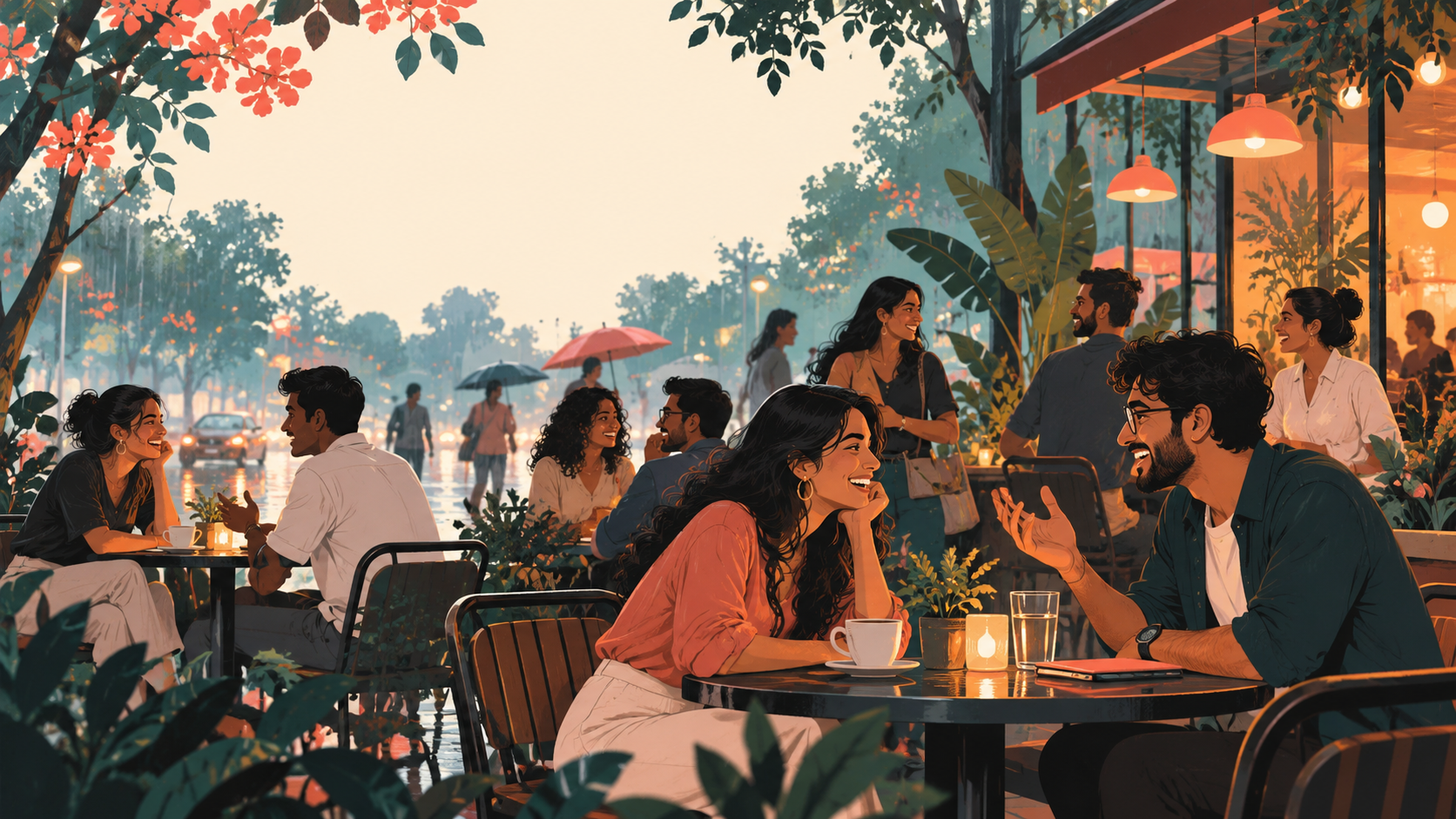
Bangalore has no shortage of singles, so why does dating in the city feel so exhausting? Here's what's actually going on, and what helps.
Bangalore has one of the largest, most educated, most internationally-minded single populations in India. On paper, it should be one of the easiest cities in the country to date in. In practice, it often feels like one of the hardest.
The reasons aren't mysterious once you list them, but they're rarely discussed honestly.
Start with the basics: Bangalore is a sprawling, traffic-choked city where meeting someone on the other side of town can mean a 90-minute commute each way. That alone kills spontaneity. First dates become logistical negotiations. Second dates require calendar coordination that rivals a product launch.
Add to that the work culture. Bangalore's tech industry runs long. 10-to-12-hour days aren't unusual, and many professionals spend weekends recovering, not socializing. The result is a city full of interesting people with almost no bandwidth for serendipity.
Then there's the social fabric. Bangalore is a transient city. People cycle in and out for jobs, higher studies, or family reasons. The friend groups that naturally produce "friend-of-friend" introductions - the most common way couples actually meet - are thinner here than in cities where people stay put for decades.
The deeper issue isn't that there aren't enough singles in Bangalore. It's that the tools available to find them are badly calibrated for what people here actually want.
Most mainstream dating apps were designed for Western, urban, casual-first contexts. They optimize for volume: more swipes, more matches, more time in-app. For someone in Bangalore looking for a genuine, values-aligned connection - someone who takes relationships seriously and has limited time to waste - this model is a terrible fit.
The signal-to-noise ratio is brutal. You swipe through hundreds of profiles with almost no information beyond photos and a one-line bio. You match. You exchange a few messages. They go nowhere. Repeat. The process is designed to feel productive while producing almost nothing.
What's missing is signal - real information about who someone is, how they think, what they value, and how they connect. Without that, every match is a cold start.
If the problem is signal, the solution has to involve better information earlier in the process.
This is where personality-based matching becomes genuinely useful - not as a gimmick, but as a practical filter. When you know someone's MBTI type, you know something about how they process the world. When you know their attachment style, you know something about how they handle closeness and conflict. Neither of these is a verdict, but both are signal.
In a city where time is scarce and social infrastructure is thin, that signal matters enormously. It's the difference between going on six mediocre dates and one genuinely promising one.
Cuper is built around this idea. Instead of leading with photos and hoping chemistry follows, it surfaces the dimensions that actually predict whether a conversation will go somewhere: communication style, emotional rhythm, values alignment, and compatibility patterns across multiple frameworks.
Bangalore rewards efficiency in everything - work, commuting, even socializing. Dating shouldn't be any different. The people who date successfully here tend to share a few traits:
Bangalore doesn't need more dating apps. It needs better ones - ones that understand that the people here are serious, time-poor, and looking for something real.
Find out who's worth meeting first - check your compatibility on Cuper.
Cuper App
Put these insights to use. See how your personality profile pairs with someone else in seconds.
The Best Personality-Based Dating Apps in India (2026)
Looking for a dating app that goes beyond swiping on photos? Here's how personality-based dating apps in India compare in 2026.
6 minDating in India: Why Personality-First Actually Works Here
Dating in India sits at the intersection of modernity and tradition, individual desire and family expectation. Personality-first dating isn't just a trend here - it's a practical solution.
7 min